As our loved ones grow older, simple daily routines that once felt effortless can become sources of worry and physical strain. Bathing, in particular, stands out as one of the most personal and necessary activities that many seniors find increasingly difficult to manage alone.
The fear of slipping, the challenge of reaching certain areas, or simply feeling unsteady on wet surfaces can turn what should be a refreshing experience into a stressful ordeal. Families often watch with concern, wanting to help but unsure how to do so without making their parent or grandparent feel helpless.
This is where bathing assistance for elderly loved ones becomes not just helpful, but essential. It allows seniors to maintain their personal standards of cleanliness while feeling respected and secure. At its heart, proper support during bath time protects both physical wellbeing and emotional health. No one should have to choose between safety and independence.
With the right approach, seniors can continue enjoying this vital part of self-care without fear or loss of dignity. In the following sections, we will explore practical ways to make bathing safer and more comfortable, helping families provide the thoughtful support their loved ones truly deserve.
Understanding The Growing Need for Reliable Senior Bathing Help at Home
Many families notice gradual changes as parents age. What used to take ten minutes in the shower now requires careful planning and sometimes ends with exhaustion or minor accidents.
Senior bathing help addresses these real challenges head-on by providing steady hands and calm guidance exactly when needed, with personal care tasks home caregivers handle being a key part of maintaining both safety and dignity.
Seniors may experience reduced mobility due to arthritis, balance issues from inner ear changes, or muscle weakness that makes stepping in and out of a tub risky. Vision problems can hide wet spots on the floor, while medications sometimes cause dizziness.
These factors combine to make independent bathing more hazardous than many realize. Professional assistance brings peace of mind because caregivers understand these limitations and know how to work around them gently.
Beyond the physical side, there is an emotional layer. Seniors often feel embarrassed asking family members for intimate help. A trained caregiver offers neutral, respectful support that preserves pride.
This help extends to choosing the right water temperature, ensuring proper rinsing of soap, and assisting with drying hard-to-reach areas. Families report that consistent senior bathing help actually increases their loved one’s confidence rather than diminishing it, because the senior knows someone capable is there without judgment.
Implementing this support early prevents small problems from becoming larger health concerns. Regular bathing reduces skin infections, improves circulation, and maintains overall hygiene that supports better immune function.
When done thoughtfully, this assistance becomes a quiet foundation that allows seniors to focus on enjoying their days instead of worrying about basic routines.
Creating A Bathroom Safety Environment with Smart Safety Measures
Bathroom safety represents one of the most important investments families can make for aging loved ones. Simple modifications transform an ordinary bathroom into a space where seniors can move with greater confidence, supported by effective bathroom safety modifications for seniors that reduce fall risks and improve independence.
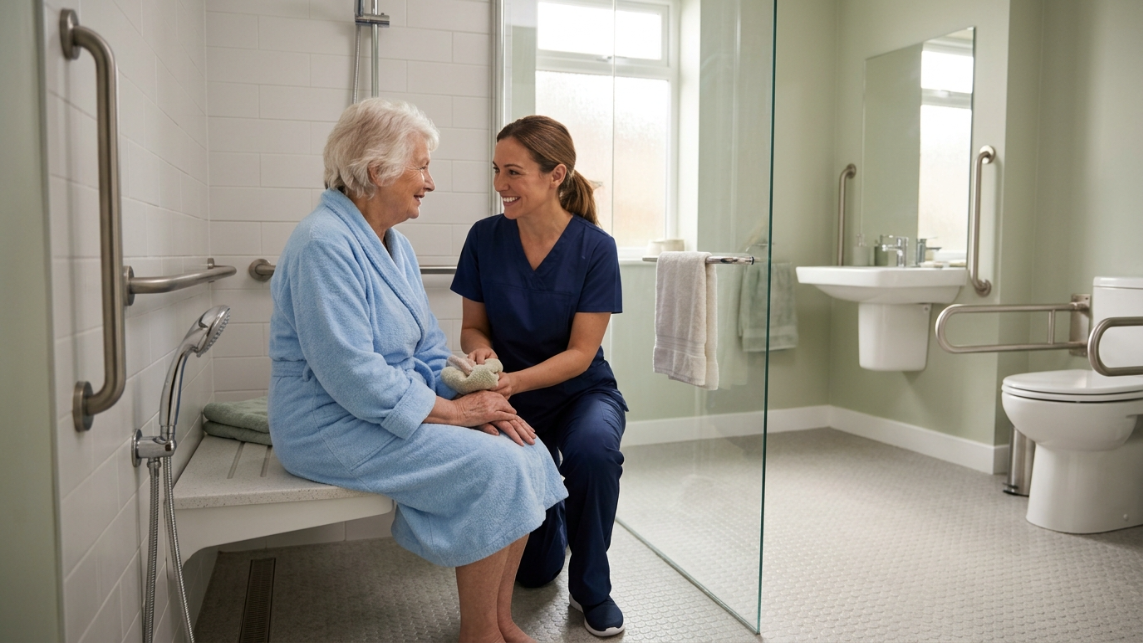
Start by installing grab bars near the toilet, shower entrance, and inside the bathing area. These sturdy supports give seniors something reliable to hold while shifting weight or changing positions. Non-slip mats or adhesive strips on the tub and shower floor dramatically reduce fall risks, which remain a leading cause of injury among older adults. Consider a shower chair or bench that allows seated bathing, taking pressure off tired legs and providing a stable place to rest.
Handheld showerheads offer flexibility, letting caregivers’ direct water comfortably without forcing the senior to stand under a fixed stream. Adequate lighting, including night lights, helps prevent missteps in low visibility. Removing clutter and ensuring clear pathways around the bathroom further minimizes accidents.
These changes work together to create an environment where creating a safe bathroom environment for seniors becomes part of the daily routine rather than a reactive fix after accidents happen.
When combined with attentive human support, these physical improvements allow bathing to remain a pleasant, private experience rather than a dangerous task.
The Role of Professional Care in Supporting Elderly Hygiene Care Routines
Elderly hygiene care goes far beyond simply getting clean. It involves understanding individual preferences, health conditions, and emotional needs that shape how each senior approaches personal care. Professional caregivers bring both skill and sensitivity to this important work.
They know how to adapt techniques for different abilities. For someone with limited shoulder movement, they use gentle washing methods that avoid strain. For those with sensitive skin, they select appropriate products that prevent irritation. This level of attention helps maintain healthy skin, prevents pressure sores in less mobile individuals, and supports overall wellness.
Caregivers also watch for subtle changes during bathing that might indicate larger health issues, such as unusual bruising, skin breakdown, or balance shifts. Their observations often prove valuable to families and doctors. Importantly, they respect modesty by using proper draping techniques and allowing as much privacy as safely possible.
Consistent attention to personal hygiene seniors receive through professional support helps maintain a sense of normalcy and self-worth. Cleanliness contributes to better sleep, reduced infection risk, and greater social confidence.
Families often share that their loved ones appear happier and more engaged after establishing reliable hygiene routines with compassionate help.
Step-By-Step Guidance for Safe and Comfortable Bathing Sessions
Effective bathing assistance follows a calm, predictable pattern that puts seniors at ease. Begin by preparing the bathroom ahead of time, warming the space and gathering all supplies so nothing interrupts the process. Test water temperature carefully, warm but not hot, to prevent burns, which older skin senses less acutely.
Help the senior undress privately, if possible, then assist with transfer into the shower or tub using proper body mechanics to protect both parties. Use a hand-held showerhead to wet the body gradually, starting from the feet and moving upward. Apply mild, fragrance-free soap with soft cloths, washing thoroughly but gently. Pay special attention to skin folds where moisture can accumulate.
Rinse completely to remove all residue, then assist with drying using soft towels, patting rather than rubbing to protect delicate skin. Apply moisturizer while skin remains slightly damp to lock in hydration. Finally, help with fresh clothing and ensure the senior feels comfortable before leaving the bathroom.
Throughout the process, prioritize bathing safety by maintaining non-slip mats, keeping grab bars within reach, and never leaving the senior unattended. Maintain pleasant conversation or play soft music if preferred.
This human connection turns a functional task into a caring interaction. Documenting any concerns noticed during sessions helps track health patterns over time. With practice, these steps become smooth and reassuring for everyone involved.
Addressing Common Emotional Concerns During Personal Care
Seniors often experience complex feelings about needing help with bathing. Some feel embarrassed, others worry about becoming a burden, and many mourn the loss of their former independence. Acknowledging these emotions openly creates space for honest conversations that strengthen family bonds.
Caregivers trained in compassionate support excel at preserving dignity in care. They offer choices whenever possible, water temperature preferences, soap scents, or the order of washing, so seniors retain decision-making power. Using professional language and maintaining calm professionalism further reduces awkwardness.
Families can help by normalizing the need for assistance as a sign of wisdom rather than weakness. Sharing stories of other respected elders who accept support gracefully often eases resistance. Encouraging participation in as many steps as safely possible helps maintain a sense of agency.
When emotional needs receive as much attention as physical ones, seniors experience less anxiety around bathing. This leads to more consistent hygiene and better overall cooperation with care routines. The result is improved quality of life for the entire family.
Choosing The Right Products and Tools for Sensitive Senior Skin
Seniors’ skin becomes thinner and drier with age, making product selection crucial for comfortable bathing. Choose gentle, pH-balanced cleansers free from harsh chemicals, dyes, and strong fragrances that can cause irritation or allergic reactions. Moisturizing body washes often work better than traditional bar soaps.
Natural sponges or soft washcloths prevent scratching. Long-handled bathing tools help those with limited reach wash their back and legs independently when possible. Shower caddies keep supplies within easy reach, reducing the need to stretch or bend awkwardly.
For hair care, select tear-free or sensitive shampoos and use lightweight conditioners. After bathing, thick, absorbent towels and quick-drying robes add comfort. Electric toothbrushes or adaptive grooming tools can complement the bathing routine for complete personal hygiene.
Always check for skin changes after bathing and adjust products accordingly. What works one month might need modification as seasons change or health conditions evolve. Working with caregivers ensures the right combination of tools and products for each individual’s unique needs, making the entire experience more pleasant and effective.
Long-Term Benefits of Consistent Bathing Support for Senior Wellness
Regular, supported bathing contributes to multiple aspects of senior health. Clean skin reduces the risk of bacterial and fungal infections that spread more easily in older adults. Proper drying and moisturizing prevent painful cracks and itching that disrupt sleep. Improved circulation from warm water can ease joint stiffness, particularly helpful for arthritis sufferers.
Mentally, knowing bathing is handled safely removes a significant daily worry. This mental relief often leads to better mood and increased willingness to participate in other activities. Socially, fresh hygiene supports confidence during visits with friends and family.
Over months and years, consistent routines built around proper bathing assistance help seniors maintain independence longer while staying healthier at home. Families experience less stress and fewer emergency situations. The cumulative effect creates a positive cycle where better physical condition supports greater emotional wellbeing, and vice versa.
Bathing Assistance for Elderly Loved Ones: A Path to Safety, Comfort, And Independence
Bathing assistance for elderly individuals represents far more than practical help with a daily task. It embodies respect for their lifelong dignity while proactively protecting their safety and health.
Through thoughtful planning, appropriate modifications, and compassionate support, families can ensure their loved ones continue enjoying clean, comfortable routines without fear or unnecessary struggle.
The journey requires patience and understanding from everyone involved, but the rewards include stronger family connections, reduced health risks, and preserved independence for as long as possible.
Professional caregivers from One Stop Home Care Services bring the expertise and warmth needed to make these moments positive rather than stressful. By prioritizing both physical safety and emotional wellbeing during bathing, we honor the seniors who have given so much throughout their lives.
Get personal hygiene care support to ensure your loved one receives respectful, reliable assistance at home. Small, consistent acts of thoughtful care create meaningful improvements in daily comfort and long-term wellness.