Watching a loved one face the challenges of dementia can stir deep emotions, fear of the unknown, sadness over changing roles, and a fierce determination to provide the best possible care. You want to keep them safe, respected, and connected to the life they have always known, all while preserving their dignity and your own well-being.
Families across Connecticut and beyond often find themselves navigating this path with compassion but uncertainty. The good news is that thoughtful, consistent support makes a profound difference.
Dementia care at home offers a compassionate alternative to institutional settings, allowing individuals to remain in familiar surroundings where memories live and comfort feels natural. This approach not only supports cognitive and emotional needs but also strengthens family bonds during a time that demands both strength and tenderness.
In the following guide, we explore how to create a supportive environment, manage daily realities, and find balance as a caregiver. Whether you are just beginning this journey or seeking ways to improve current arrangements, these insights aim to empower you with knowledge and practical steps.
Understanding The Reality of Memory Loss: When Home Becomes the Best Place for Cognitive Decline Support
Before discussing specific strategies, families must first accept a difficult truth outlined in recognizing early signs of dementia. Dementia changes a person, but it does not erase their need for familiarity. Moving a loved one to an unfamiliar facility often accelerates confusion. The simple act of waking up in a room they do not recognize can trigger agitation, fear, and withdrawal.
Cognitive decline support works best when it is woven into existing routines. That means keeping the morning coffee ritual intact. It means leaving photographs where they can see them. It means allowing them to walk the same hallway they have walked for twenty years. Research consistently shows that people living with Alzheimer’s and related dementias experience fewer behavioral episodes when they remain in a stable home environment.
However, stability alone is not enough. You also need structure, supervision, and professional guidance. Families who attempt to manage everything alone often burn out quickly. The goal is not to become a full-time nurse overnight.
The goal is to build a sustainable system where your loved one feels safe, and you feel supported. That balance is achievable with the right approach and the right team.
Recognizing The Early Signs of Dementia Stages: A Roadmap for Families Navigating Progression
Every dementia journey follows a path, but no two paths look exactly the same. Understanding the general dementia stages helps families prepare for what is coming without panicking about every small change.
In the early stage, a person may still drive, cook, and hold conversations. They simply forget appointments or repeat questions. This is the time to introduce gentle routines and document important information. The middle stage brings more noticeable challenges. Your loved one may struggle with personal hygiene, wander during the night, or confuse family members.
This is when Alzheimer’s home care becomes essential. Professional caregivers who understand behavioral triggers can redirect agitation before it escalates.
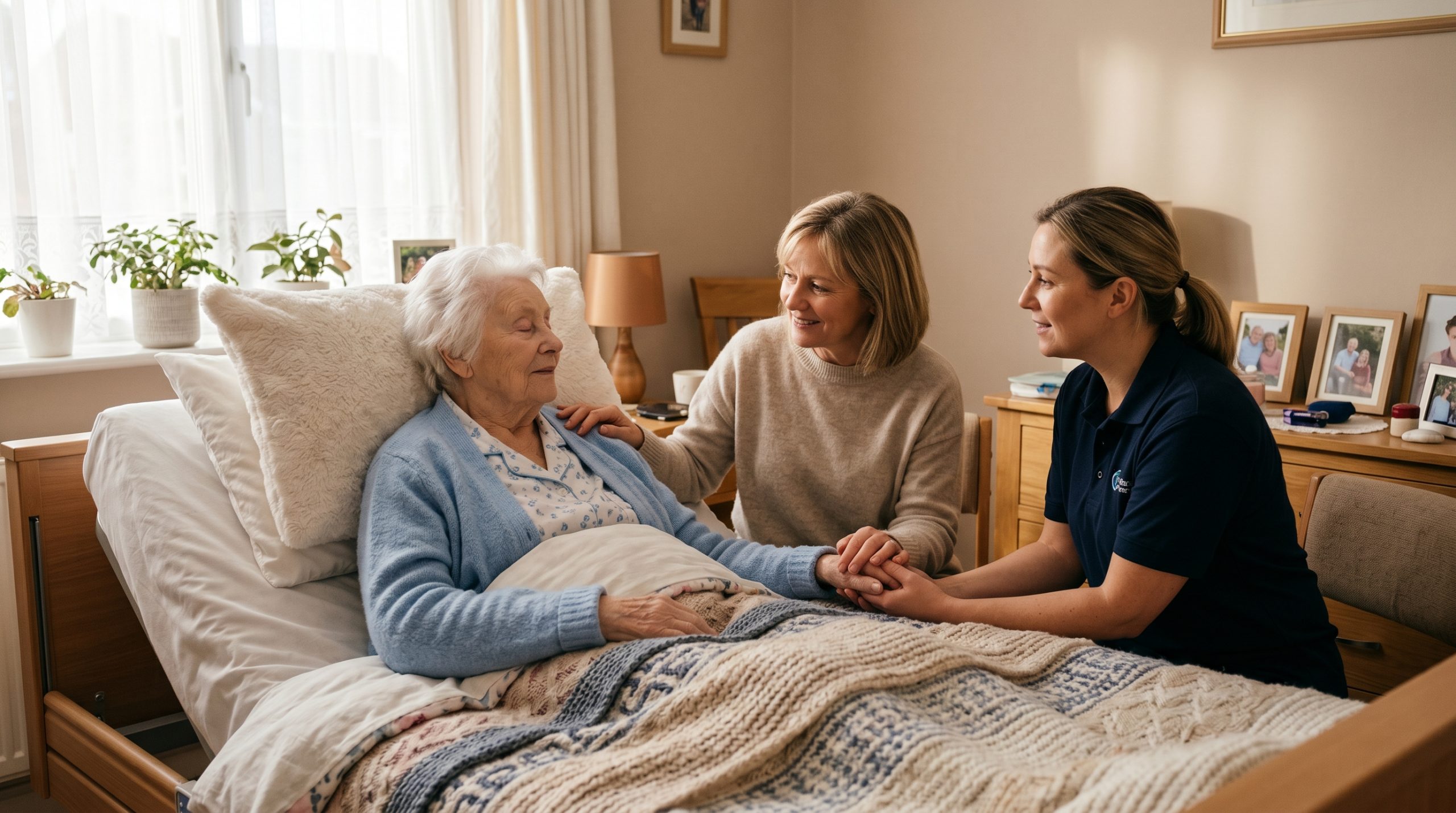
The late stage often requires round-the-clock assistance, especially in cases involving understanding sundowning in dementia patients, where confusion, agitation, and sleep disruption become more pronounced in the evening hours.
Knowing where you are on the roadmap allows you to ask for the right help at the right time. Do not wait until exhaustion forces your hand. Early preparation preserves your energy for the moments that truly matter.
Practical Dementia Caregiver Tips for Daily Personal Care Without Stripping Dignity
One of the hardest transitions for adult children is helping a parent bathe or use the bathroom. The instinct to preserve privacy clashes with the reality of safety.
Effective dementia caregiver tips always start with respect. Never approach personal care from behind. Always announce what you are going to do before you do it. Use a calm, steady voice. If they resist, step away and try again later. Rushing creates fear, and fear creates aggression. For bathing, maintain a consistent time of day. Check water temperature beforehand because dementia affects temperature perception. Use handheld showerheads and non-slip mats. Lay out towels and clothes in the order they go on. Simplify choices.
Instead of asking “What do you want to wear?” hold up two shirts and let them point. For toileting, watch for restless behaviors that signal urgency. Create a scheduled bathroom routine every two hours. Consider raised toilet seats and grab bars.
These small environmental changes reduce accidents and maintain a sense of control. Remember that frustration is not personal. The disease is speaking. Your patience is the answer.
Creating A Safe Home Environment for Memory Loss Management and Fall Prevention
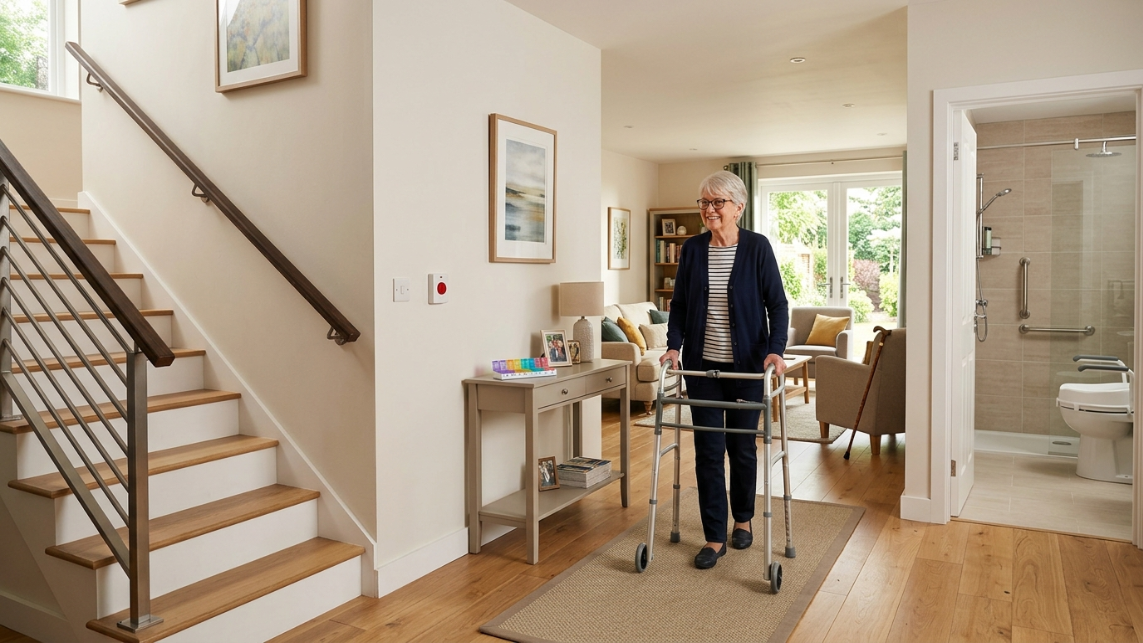
Safety concerns multiply as dementia progresses. A home that felt perfectly fine five years ago may now contain hidden dangers. Memory loss management begins with a room-by-room safety audit.
Start in the kitchen. Install childproof locks on cabinets containing knives, cleaning supplies, or medications. Remove the knobs from the stove or install an automatic shut-off device. Unplug small appliances when not in use.
In the bathroom, set the water heater to 120 degrees Fahrenheit to prevent scalding. Remove small rugs that cause tripping. Install a shower chair and handheld nozzle. Throughout the house, secure loose railings and install nightlights in hallways, bathrooms, and staircases. Consider door alarms that chime when opened.
For wandering risks, place black floor mats in front of exterior doors. Many people with dementia perceive black surfaces as holes and will avoid stepping on them. Lock away dangerous tools, sharp objects, and toxic products. Remove clutter from walking paths.
These changes do not make the home feel institutional. They make it feel safer while allowing your loved one to move freely. You cannot prevent every accident, but you can dramatically reduce the most common risks.
How Professional Memory Care Services Lighten the Load Without Removing Family Involvement
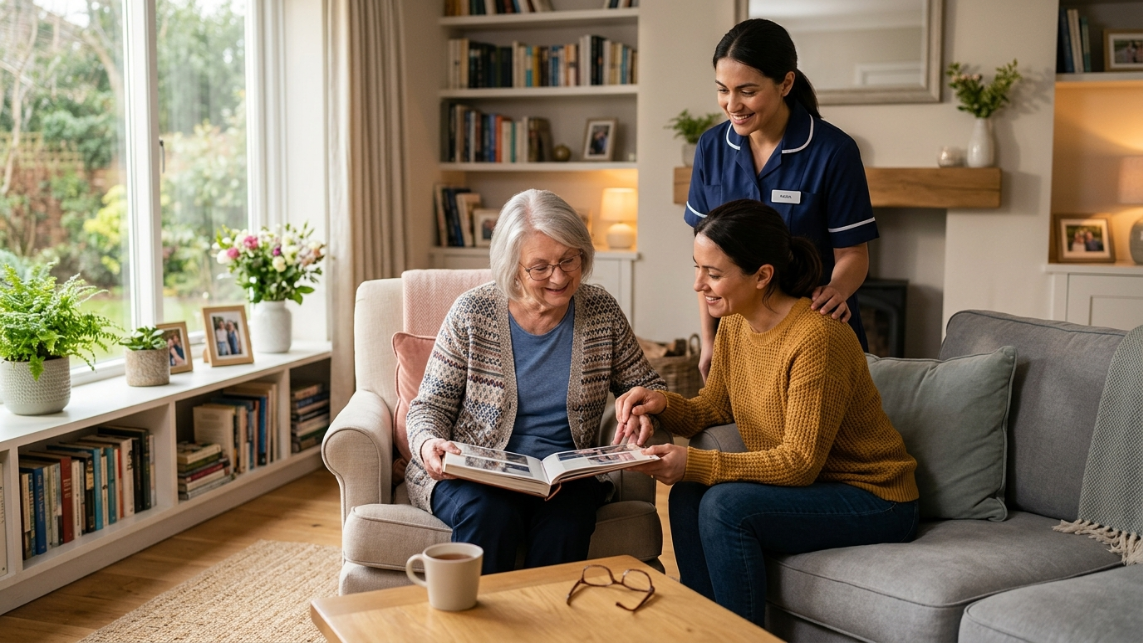
Some families believe that hiring help means abandoning their role. That belief is incorrect and harmful. Professional memory care services exist to strengthen family care, not replace it. A trained caregiver can handle the physically demanding tasks: bathing, toileting, feeding, and repositioning at night. They can manage medication schedules and document behavioral changes. They can sit with your loved one while you take a walk, attend a work meeting, or simply sleep for eight uninterrupted hours.
This partnership allows you to return to your original role. You become the son or daughter again. The spouse who holds hands and shares memories. The grandchild who reads stories aloud. Professional caregivers do not erase the family bond. They protect it. When interviewing agencies, ask about dementia-specific training.
Ask how they handle redirection during sundowning. Ask about backup plans if a caregiver calls out sick. The right agency will welcome your involvement and encourage your observations. You are the expert on your loved one’s history. They are the expert on daily management. Together, you build a complete support system.
Managing Difficult Behaviors and Emotional Outbursts with Compassion and Structure
Behavioral changes frighten families more than memory loss itself. A gentle parent may suddenly scream, hit, or accuse you of stealing. This is not malice. This is the brain misfiring.
Alzheimer’s home care teaches a simple principle: behavior is communication. Aggression often signals pain, hunger, fatigue, or overstimulation. First, check for physical causes. Is it time for a bathroom break? Have they eaten recently? Are they too hot or too cold? If physical needs are met, look at the environment.
Loud television, multiple conversations, or unfamiliar faces can overwhelm a dementia brain. Reduce noise. Dim harsh lights. Speak slowly using short sentences. Do not argue with false beliefs. If they insist a deceased relative is coming for dinner, acknowledge the feeling: “That sounds nice. Let’s sit and wait together.”
Redirect to a pleasant activity like folding laundry or looking at photo albums. Never use restraint or force. Never take accusations personally. Step away if you feel your own temper rising. Breathe for two minutes. Then return with a neutral expression and a soft voice. You cannot reason with dementia. You can only enter their reality and guide them gently toward calm.
Nutrition, Hydration, And Medication Management Without Daily Battles
Eating and drinking become surprisingly complex in middle and late-stage dementia. Your loved one may forget to eat, refuse food, or forget how to use utensils. Set a daily schedule for three meals and two snacks. Use high-contrast plates so food stands out from the plate surface. Red plates against white food work well. Offer one food item at a time instead of a full plate. Cut food into bite-sized pieces.
For hydration, offer small cups of water every hour. Use straws if swallowing is safe. Monitor for signs of dehydration: dry mouth, sunken eyes, or dark urine. Medication management requires even more structure. Use a pill organizer with separate compartments for morning, noon, evening, and night.
Set phone alarms or use automatic dispensers. Never assume they have taken their pills just because the bottle is open. Watch them swallow each dose. If they refuse, crush pills only after confirming with a pharmacist which medications are safe to crush. Hide crushed pills in applesauce or pudding. Keep a written log of every dose given. These small systems prevent hospitalizations from missed medications or accidental overdoses.
When Respite Care Becomes Necessary: Recognizing Caregiver Burnout Before It Breaks You
Loving someone with dementia does not make you immune to exhaustion. In fact, love often makes burnout worse because you refuse to ask for help. Watch for these warning signs. You feel angry more often than patient. You cry in the car before driving home. You have stopped seeing friends or pursuing hobbies. You are neglecting your own medical appointments. Your sleep is broken, and your patience is gone.
These symptoms mean you need memory care services for yourself, not just for your loved one. Respite care allows a professional to step in for a few hours or a few days while you rest. This is not weakness. This is sustainability.
A burned-out caregiver makes mistakes. They forget medications. They snap during a moment of confusion. They accidentally leave a door unlatched. Taking regular breaks makes you a better caregiver.
It also protects your own long-term health. Studies show family caregivers have higher rates of depression, heart disease, and early mortality. You cannot pour from an empty cup. Schedule weekly respite time. Use those hours to sleep, exercise, or simply sit in silence. Your loved one needs you healthy far more than they need you present every single second.
Building Your Long-Term Support Team and Knowing When to Transition Care
No single person can provide dementia care at home indefinitely. The most successful families build a team. That team may include a geriatric care manager, a home care agency, a neurologist, a physical therapist, and a support group for family members.
Start building this team early, even if you do not need every service yet. Attend local Alzheimer’s Association meetings. Ask your loved one’s doctor for referrals to memory care services in your area. Create a binder with emergency contacts, medication lists, medical histories, and legal documents. Update it every three months.
As the disease progresses, reassess whether home remains the right setting. If your loved one becomes bedbound, requires two people to lift them, or develops aggressive behaviors that endanger others, full-time facility care may become necessary.
Throughout this entire journey, remember one thing. You are not just managing a disease. You are honoring a person. And that person, at their core, wants the same thing you want: to be seen, to be safe, and to be loved.
Looking Ahead: Your Family’s Path Forward with Confidence and Compassion
Walking alongside someone through dementia is one of the hardest things a family can do. It asks more of you than you ever imagined giving. But here is the truth.
Dementia care at home is possible when you combine education, professional support, and unwavering compassion. You will have bad days. You will question your own patience. And then you will watch your loved one smile at a familiar song, or squeeze your hand during a quiet moment, and you will remember why you chose this path.
At One Stop Home Care Services, we believe families should never walk this road alone. The right support does not diminish your role. It strengthens your ability to show up as the child, the spouse, or the friend your loved one still recognizes somewhere deep inside.
Explore communication tips for dementia caregivers to better navigate daily interactions with confidence and compassion.